


mill liners separation machine-mill liner recycling equipment-induction heating recycling machine
mill liners separation recycling machine with induction heating
mill liners separation recycling machine with induction heating solution
induction heating to separate recover rubber and steel plates for waste mill liners
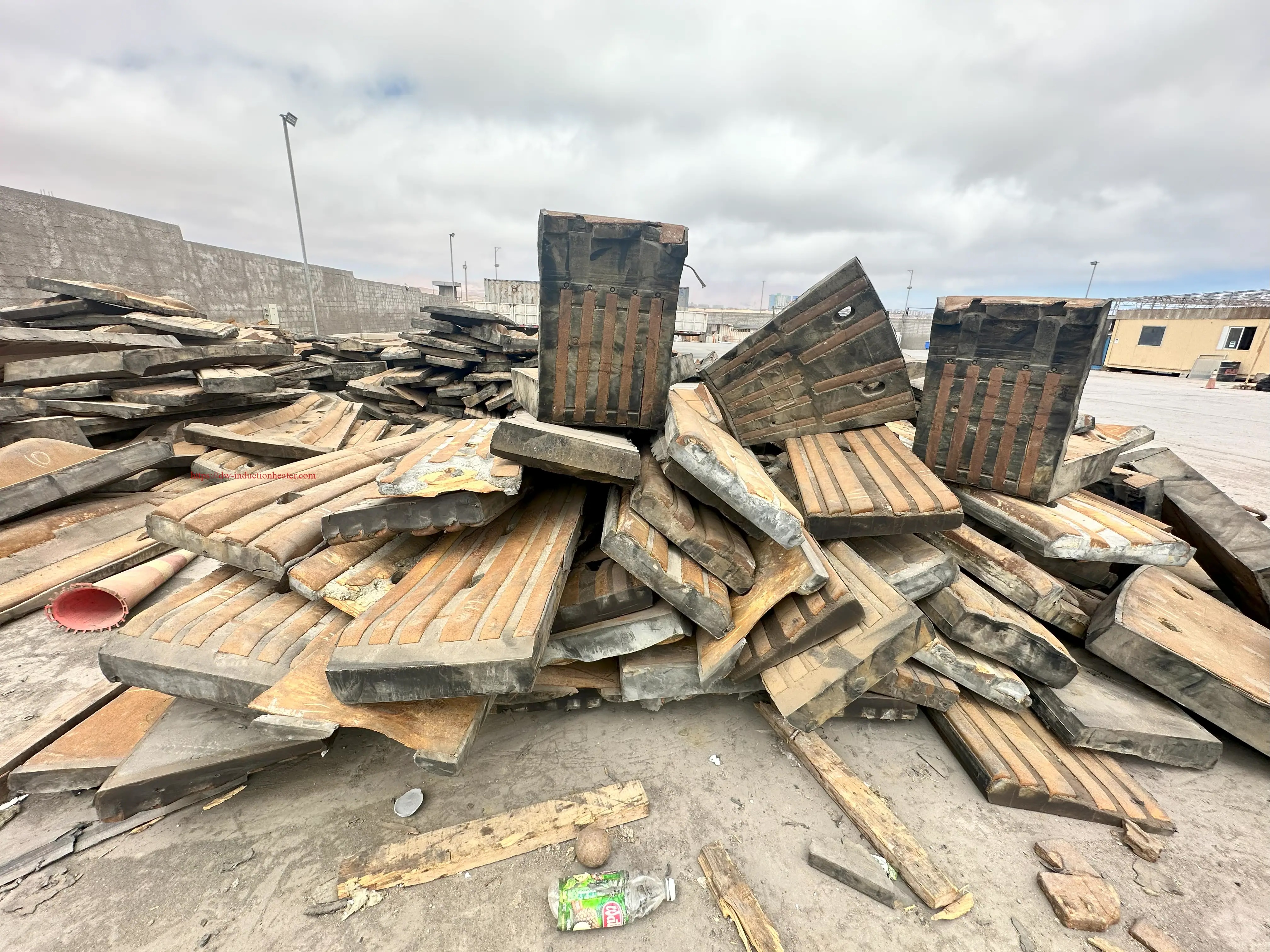
mill linings separation recycling machine with induction heating
Waste Mill Liners Recycling with Induction Heating Separation: A Cleaner Route to Recover Steel and Rubber from Mining Wear Parts
CA, UNITED STATES, May 17, 2026 /EINPresswire.com/ — The global mining industry has long faced a quiet but significant waste challenge: what to do with the enormous volume of worn-out grinding mill liners that fall out of service every year. These hefty composite components — engineered from high-strength steel plates bonded to wear-resistant rubber — protect the inside of grinding mills used to crush ore in copper, gold, iron, and other mineral operations. When they wear out, the same composite structure that made them so effective becomes the very reason they are notoriously difficult to recycle.
That picture is now changing. Over the past few years, induction heating separation has moved from a promising laboratory concept to a commercially deployed industrial service. By precisely heating only the metallic components inside a worn liner without burning, shredding, or chemically attacking the rubber, induction-based systems are enabling clean, efficient recovery of both materials — a development with meaningful implications for sustainability, cost, and the broader circular economy of the mining sector.
The Growing Recycling Challenge of Waste Mill Liners
Mill liners are used inside ball mills, SAG mills, AG mills, and rod mills to protect the mill shell and improve grinding performance. Depending on the application, liners may be manufactured from high-manganese steel, alloy steel, rubber, or rubber-metal composite structures. Modern composite liners are widely used because they can reduce weight, improve installation safety, lower noise, and optimize wear performance.
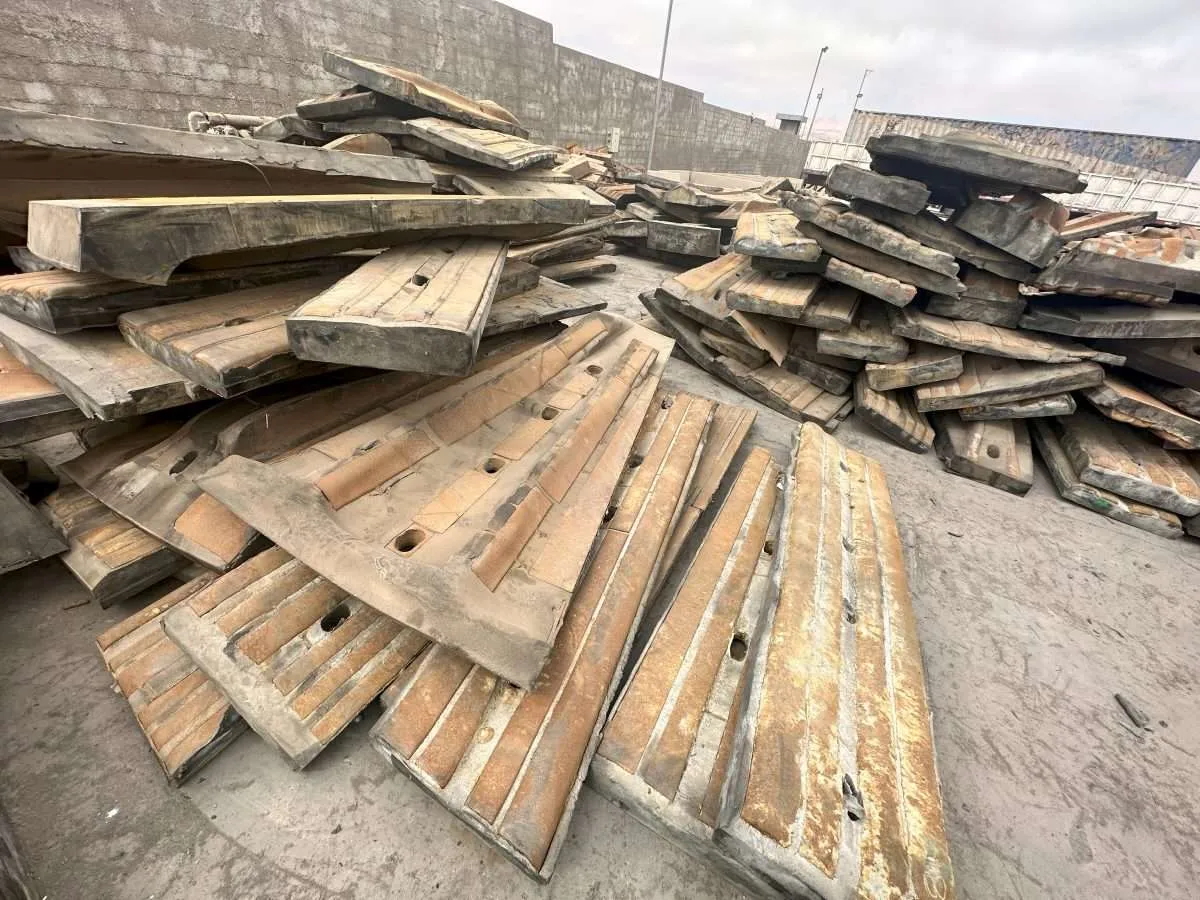
However, these benefits also create a recycling challenge. A worn composite mill liner is not a single-material scrap item. It may contain rubber, steel plates, cast inserts, bolt hardware, backing plates, and embedded reinforcement components. Separating these materials with conventional mechanical methods can be slow, labor-intensive, noisy, and sometimes unsafe.
Many mines have historically stored worn liners in scrap yards or sent them to landfill when separation was not economical. This practice wastes recoverable steel and rubber while increasing the environmental footprint of mineral processing. As the mining industry moves toward circular-economy models, liner recycling is becoming more than a waste-management issue; it is becoming a measurable part of operational responsibility.
Metso has publicly described mill lining recycling as a way to solve the problem of worn liners being sent to landfill, while FLS states that it has developed recycling solutions for composite, rubber, and metallic grinding mill liners. These industry moves confirm that liner recycling is now a real engineering topic, not only a sustainability slogan.
How Induction Heating Separation Works
Induction heating is itself not a new technology — it has been used for decades in metal hardening, brazing, melting, and forging. What is new is its application to the composite recycling challenge.
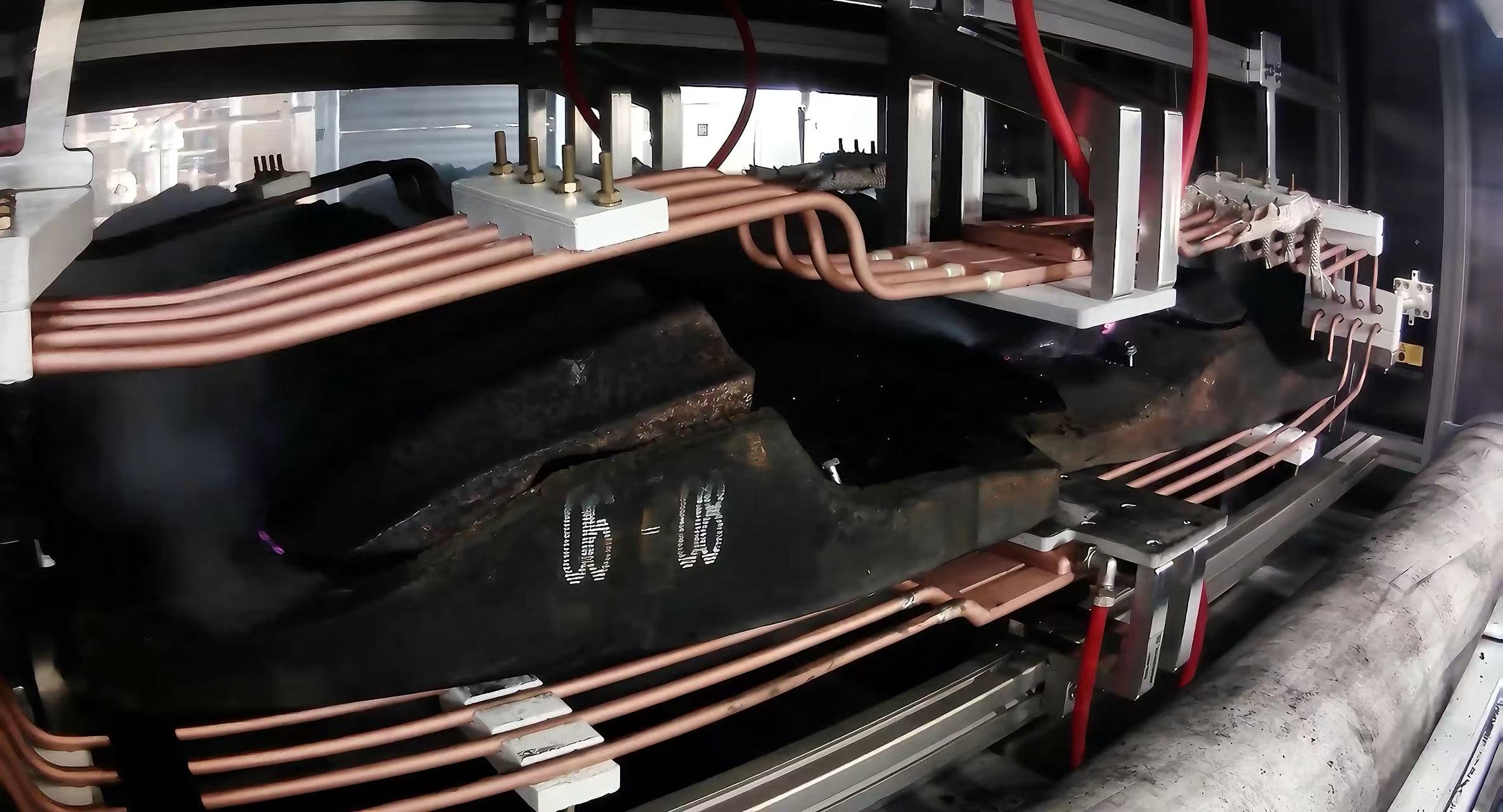
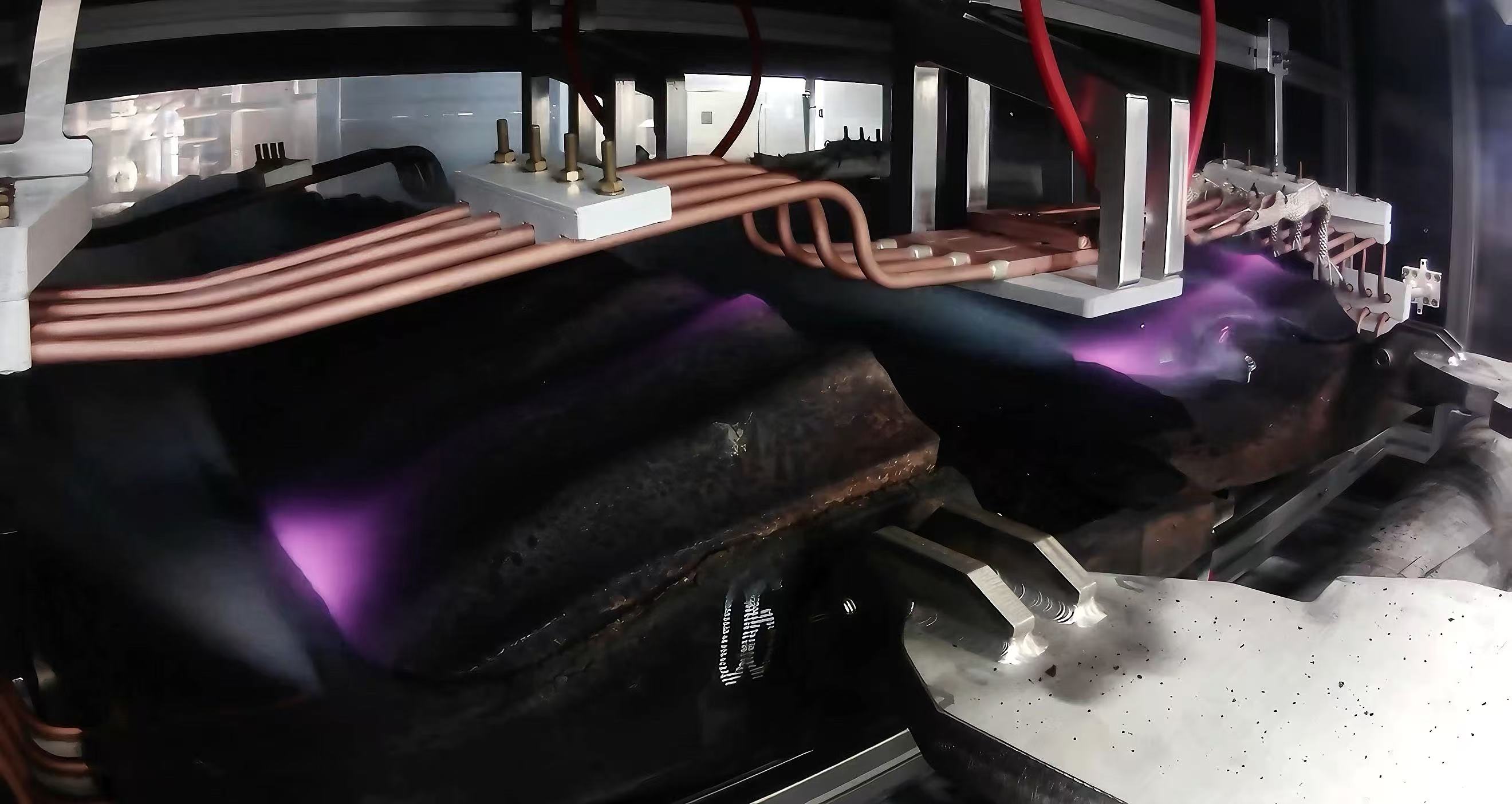
The underlying physics is straightforward. An alternating electric current is passed through a copper coil, generating a rapidly oscillating electromagnetic field. When an electrically conductive material — such as the steel components of a mill liner — is placed within that field, eddy currents are induced inside it. The resistance of the steel to these currents produces heat, and in ferromagnetic materials, additional heating comes from hysteresis losses below the Curie point. Non-conductive materials, such as rubber, are not heated directly by the field.
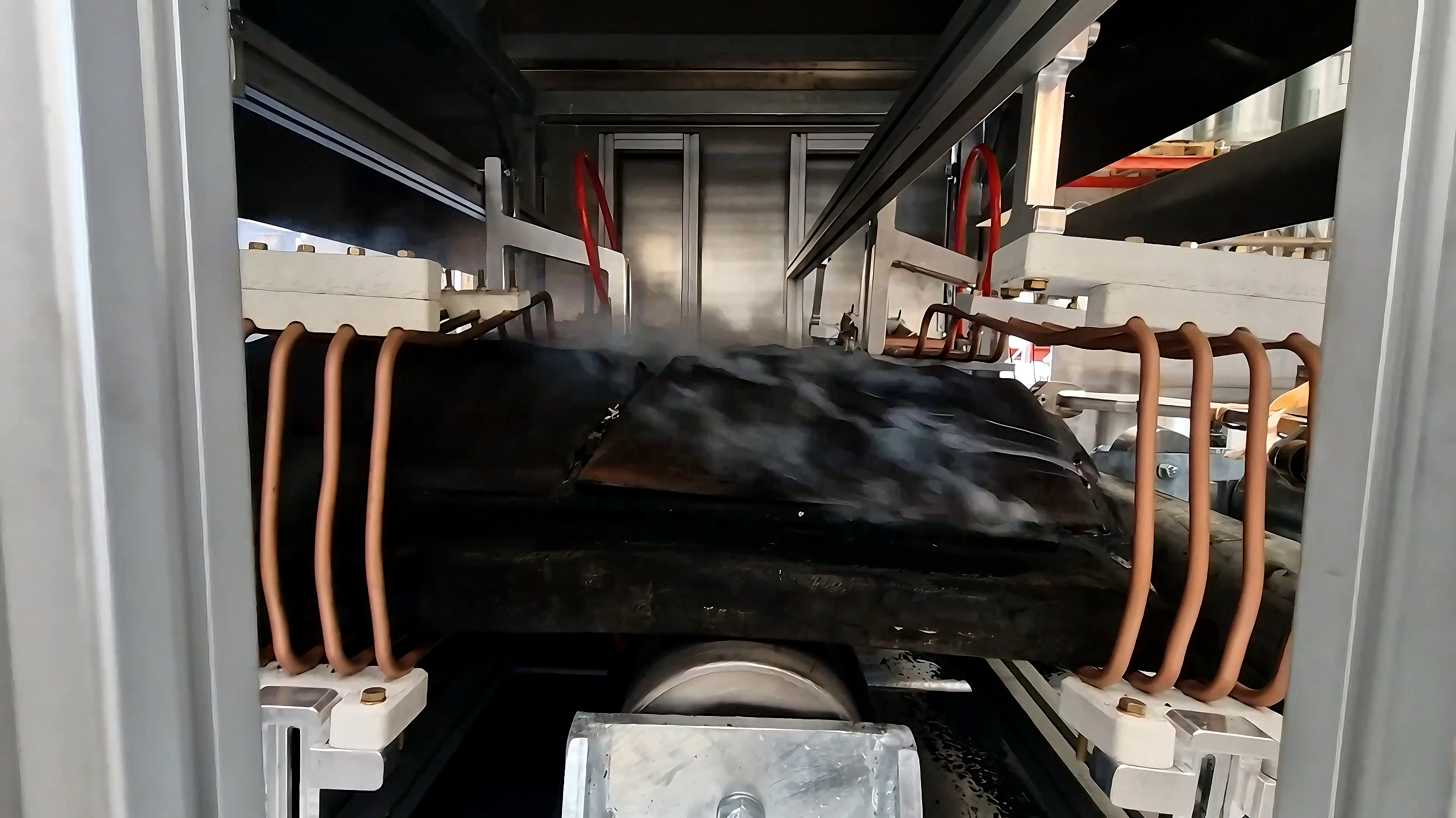
This selectivity is the heart of the recycling breakthrough. By tuning the frequency, power, and coil geometry, an induction system can rapidly bring the steel inserts and backing plates of a liner up to a temperature at which the bond between steel and rubber softens or releases — without setting the rubber on fire, without producing flames, and without combustion gases. Once the bond is broken, the rubber peels away cleanly, leaving steel and rubber as two recoverable streams.
A typical industrial separation line follows a sequence of stages. Worn liners arrive at the facility and are first cleaned to remove residual ore slurry, dirt, and other contaminants that could interfere with heating or downstream sorting. Any non-relevant attachments are removed manually. The cleaned liner is then fed into the induction zone, where coils are positioned to deliver electromagnetic energy specifically into the embedded steel components. As the steel heats and the bond fails, the rubber detaches and is mechanically removed.
The two output streams are then routed separately. Steel components — including cast inserts, wear plates, and backing plates — are inspected and either sent for re-machining, scrap-metal recovery, or, in some cases, refurbishment for return to service. The rubber, no longer fused to metal and largely uncontaminated, can be granulated for use in lower-grade rubber products, civil-engineering applications, or energy recovery.
Why It Matters: Efficiency, Safety, and Sustainability
The advantages of induction heating separation over conventional methods are practical, measurable, and aligned with mining’s broader sustainability targets.
Speed and throughput. Because induction transfers energy directly into the steel rather than relying on convection or conduction from an external heat source, target temperatures are reached quickly. A liner that might take hours to deconstruct using torches or mechanical methods can be processed in a fraction of the time on a properly engineered induction line.
Cleaner separation. Open flames and high-temperature torches tend to scorch rubber, generate smoke, and release combustion byproducts. Induction heating is flameless. The rubber that comes off is typically intact enough to be granulated and reused, rather than degraded to the point where landfilling or incineration becomes the only option.
Worker safety. Conventional separation methods involve direct exposure to flames, sparks, sharp blades, or heavy mechanical equipment. Induction systems can be substantially enclosed and automated, reducing worker contact with hot surfaces and airborne contaminants. The contactless nature of the heating itself also lowers risk.
Energy efficiency. Induction heating delivers energy precisely where it is needed and ignores everything else. There is no wasted energy heating large furnace chambers or the surrounding atmosphere. For a recycling line operating at industrial scale, the energy bill per tonne of material processed can be markedly lower than for thermal alternatives.
Lower emissions. Less landfill volume, reduced trucking of waste, no open combustion, and the avoided emissions of producing virgin steel from ore all stack together to produce a meaningful carbon reduction. Recycled steel typically requires a fraction of the energy of primary steel production, so every tonne of steel recovered from a worn liner translates directly into a smaller carbon footprint for the operation.
Engineering Configuration of an Induction Mill Liner Recycling System
A complete induction heating separation system for waste mill liners is not only an induction heater. It is an integrated recycling workstation. The main equipment may include:
Induction Power Supply
The power supply converts grid power into controlled medium-frequency or high-frequency current. Typical industrial systems may be designed from tens of kilowatts to several hundred kilowatts depending on liner size, steel thickness, required cycle time, and production capacity.
Induction Coil or Flexible Heating Cable
The coil is the key process tool. For flat steel-backed liners, a flat rectangular coil can deliver uniform heating. For curved liners, flexible induction cables may be more suitable. For large liners, segmented coil heating may be used to heat one zone at a time.
Water-Cooling System
Induction coils and power electronics require cooling. A closed-loop chiller or water-cooling unit maintains stable operating temperature and protects the power supply.
Mechanical Handling System
Waste mill liners are heavy and irregular. A recycling line may include cranes, hydraulic lifters, roller tables, turning fixtures, clamping frames, or robotic positioning systems.
Separation Fixture
After heating, the system needs mechanical force to peel, press, or pull the rubber and steel apart. The fixture should apply force in a controlled direction to reduce rubber tearing and improve steel recovery.
Temperature Monitoring System
Infrared sensors, thermocouples, thermal cameras, or temperature-indicating methods may be used to monitor heating. Closed-loop control improves process consistency.
Fume Extraction and Safety Enclosure
Even when induction heating is controlled, rubber heating may release odor or fumes. A recycling workstation should include local extraction, filtration, ventilation, and operator protection.
Control Cabinet and HMI
Operators need recipes for different liner types. Parameters such as power, heating time, coil position, target temperature, cooling status, and alarm history can be managed through a PLC and touchscreen interface.
Suitable Applications
Induction heating separation can be applied to a wide range of end-of-life mining wear parts, including:
Waste ball mill liners
Waste SAG mill liners
Composite mill liners
Rubber-metal bonded liners
Steel-backed rubber liners
Mill discharge liners
Feed-end liners
Shell liners
Lifter bars with steel reinforcement
Rubber wear panels with metal backing
Mining chute liners with embedded steel
Rubber-covered steel components from mineral processing plants
The technology is especially useful when the liner contains a large steel plate or insert that can be heated by induction. Pure rubber components without metal reinforcement are not suitable for induction separation by themselves, because rubber is not directly heated by electromagnetic induction in the same way as conductive metals.
Environmental and Economic Impact
The environmental value of waste mill liner recycling comes from several sources.
First, it reduces landfill volume. Mill liners are bulky and heavy, so every liner recycled can represent a meaningful reduction in industrial waste.
Second, it recovers steel. Recycling steel generally requires less energy than producing primary steel from ore, and cleaner scrap streams are more valuable for downstream processing.
Third, it enables better use of rubber. Depending on rubber condition and local recycling infrastructure, separated rubber may be granulated, reused in industrial products, processed into secondary materials, or directed to controlled energy recovery rather than unmanaged disposal.
Fourth, it improves traceability. A dedicated recycling process allows mines to document liner quantities, recovered metal weight, rubber output, and waste reduction. This data can support ESG reporting, sustainability audits, and supplier responsibility programs.
From an economic point of view, the return depends on liner volume, scrap steel price, labor cost, disposal cost, equipment capacity, and local recycling channels. Mines with high liner replacement rates or centralized regional recycling hubs may achieve stronger economic benefits than small operations with irregular liner waste. However, even when the direct scrap value is modest, the combined value of reduced disposal cost, improved safety, and sustainability compliance can make the process attractive.
The Economics of Circularity
From a purely commercial standpoint, induction heating separation reframes the worn-liner waste stream from a cost center into a revenue or cost-recovery opportunity.
On the disposal side, miners avoid landfill fees, hazardous waste handling charges (where applicable), and the increasingly significant transport costs of hauling heavy steel-and-rubber waste over long distances from remote sites. On the recovery side, the steel produced is high-quality scrap suitable for re-melting, often at prices linked to global ferrous metal markets. The rubber, once cleanly separated, has a range of secondary uses — from rubber mats and base layers to molded products and energy recovery — that have established (if cyclical) markets.
For mining service contractors offering induction-based recycling, the model also opens up new revenue streams beyond the one-time sale of replacement liners. Recycling-as-a-service fits naturally into long-term mill lining service contracts, allowing suppliers to retain customer relationships across the full lifecycle of the equipment — manufacture, installation, monitoring, replacement, and end-of-life recovery.
What to Watch Next
Several areas of development are likely to shape the next phase of induction heating separation in mining.
The first is scalability and mobility. Many of the world’s large mining operations sit far from established industrial centers. Bringing the recycling line to the mine, in modular or transportable form, would dramatically reduce the logistics burden and emissions associated with shipping worn liners to centralized facilities. Mobile or containerized induction separation units are an obvious target for engineering investment.
The second is adaptability to different liner designs. Mill liners vary significantly between operations and between equipment generations. Future systems will need to accommodate a wider range of compositions, geometries, and bonding chemistries, ideally with automated recognition and parameter adjustment rather than manual reconfiguration.
The third is improving the quality of the recovered rubber. Steel scrap from mill liners is already a well-understood, high-value output; the rubber side is more variable, and the most successful recycling operations will be those that can deliver consistent rubber characteristics good enough to displace virgin rubber in more demanding applications.
The fourth is wider technology adoption. As more equipment suppliers, recycling specialists, and mining houses recognize the commercial and ESG advantages, induction-based separation may become a standard offering across the industry rather than the differentiated service it is today. Healthy competition would be expected to accelerate improvements and bring the cost of recycling per tonne down further.
A Quiet but Important Step Toward Circular Mining
Mining sits at the start of nearly every industrial value chain. Steel, copper, aluminum, lithium, and dozens of other materials begin their lives as ore crushed inside grinding mills. The components that line those mills wear out by design — they are sacrificial parts engineered to take the impact and abrasion that the mill itself must not. For most of mining’s modern history, the disposal of those worn components has been an unglamorous operational problem solved with trucks and landfills.
Induction heating separation does not change the fundamental fact that liners wear out. What it changes is what happens next. Instead of a one-way trip to a waste site, the steel and the rubber are routed back into productive use. The mining operation captures economic value that previously walked out the gate as scrap. The planet sees less landfilled material, less new steel produced from virgin ore, and less CO₂ emitted along the way.
It is the kind of quiet, engineering-led sustainability progress that rarely makes headlines but that, multiplied across hundreds of grinding mills worldwide, adds up to a meaningful shift. As more mining operations adopt the technology in the coming years, the worn mill liner — once a symbol of mining’s hard-to-recycle waste problem — may instead become an early example of how the industry is closing its material loops, one composite component at a time.
Conclusion
Waste mill liners recycling with induction heating separation offers a practical solution to one of mining’s overlooked waste challenges. By using electromagnetic induction to heat steel plates, inserts, and backing structures inside rubber-metal liners, the process weakens the bond between materials and enables cleaner separation of steel and rubber.
For mining companies, this means lower landfill dependence, improved material recovery, safer processing, and stronger circular-economy performance. For recycling companies, it creates a new opportunity to process high-value industrial wear parts. For liner manufacturers, it supports extended producer responsibility and more sustainable product life cycles.
As the mining industry continues to modernize, waste mill liner recycling will become an important part of responsible mineral processing. Induction heating separation provides the engineering foundation to make that recycling cleaner, faster, and more economically practical.
Cali Chen
HLQ Induction Equipment Co.,Ltd
+86 131 5596 5571
[email protected]
Visit us on social media:
Facebook
YouTube
X
Legal Disclaimer:
EIN Presswire provides this news content “as is” without warranty of any kind. We do not accept any responsibility or liability
for the accuracy, content, images, videos, licenses, completeness, legality, or reliability of the information contained in this
article. If you have any complaints or copyright issues related to this article, kindly contact the author above.

